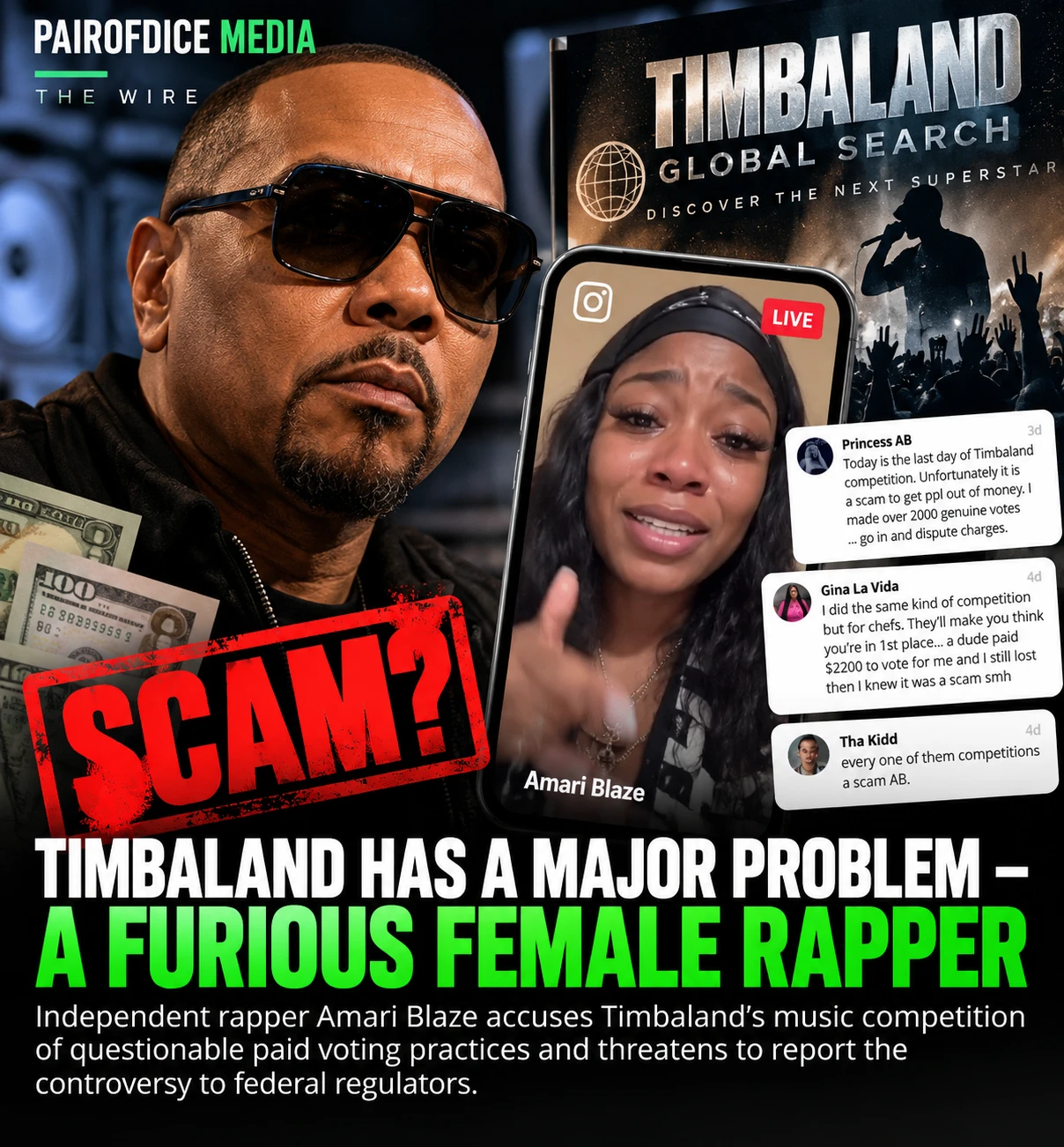
Multiple artists and supporters are questioning the competition’s paid-voting system, raising concerns about transparency, fairness and the financial pressure placed on aspiring musicians.
A music competition associated with legendary producer Timbaland is facing growing criticism from independent artists who say they and their supporters spent money purchasing votes, only to walk away questioning whether the competition was ever fair.
The controversy surrounding Timbaland’s Global Search is no longer just about one disappointed contestant.
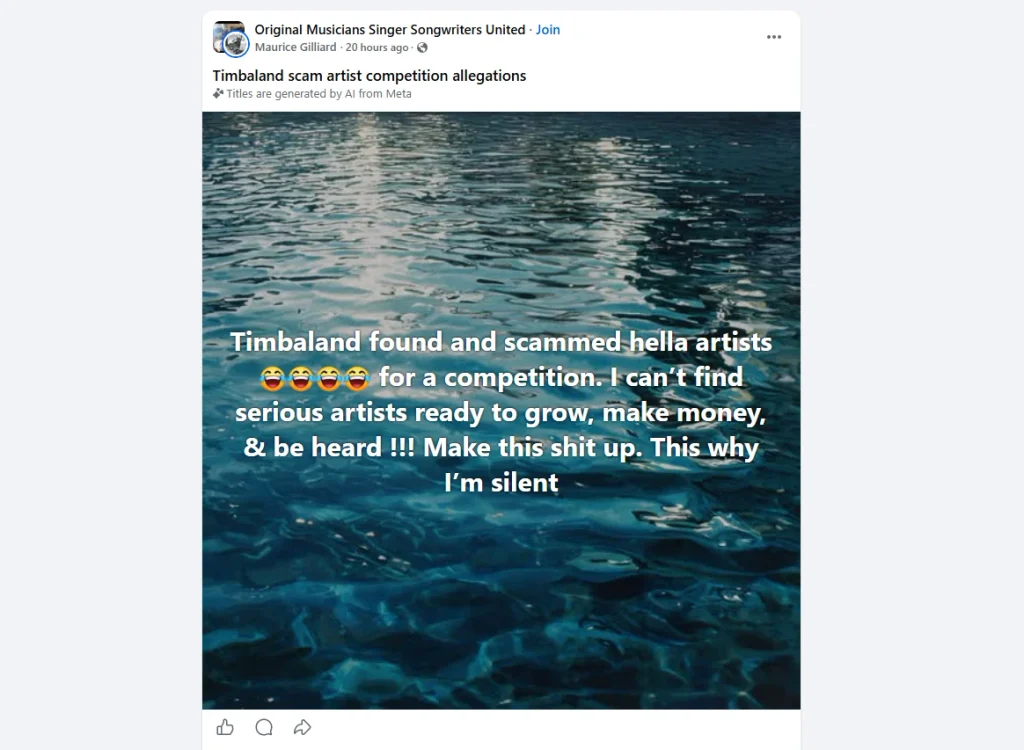
Artists have taken to social media to describe their experiences, question the voting process and encourage supporters to seek refunds. Some have publicly characterized the competition as a scam.
For many aspiring musicians, the situation represents a familiar frustration: investing time, money and energy into an opportunity advertised as a potential career breakthrough, without fully understanding how success will ultimately be determined.
The accusations remain unproven, and there has been no established finding that Timbaland or the competition’s organizers committed fraud.
However, the complaints raise important questions about the business model behind paid-voting competitions and the responsibility of established industry figures who promote them.
A Competition That Promised a Major Opportunity
Timbaland’s Global Search attracted independent artists with the prospect of recognition, industry exposure and substantial cash prizes.
According to reporting from AllHipHop, the competition advertised a $50,000 first-place prize, $30,000 for second place and $20,000 for third.
For independent musicians who often finance their own recording sessions, music videos, marketing campaigns and distribution, those prizes represent significant opportunities.
But contestants were reportedly encouraged to mobilize their audiences to vote, with supporters given opportunities to purchase additional votes.
That is where much of the controversy begins.
Rather than evaluating artists solely on their music, a paid-voting structure introduces a financial component into the competition.
Artists with supporters willing or able to spend more money may gain an advantage, depending on how purchased votes are counted and how the contest determines its winners.
The central question is whether contestants and their supporters understood those rules before spending money.
Artists Say Their Supporters Spent Real Money
Across social media, contestants have expressed frustration with the financial side of the competition.
Some have described family members, friends and fans purchasing votes to support their music careers.
Others have questioned why certain contestants advanced despite apparently having smaller audiences or less visible support.
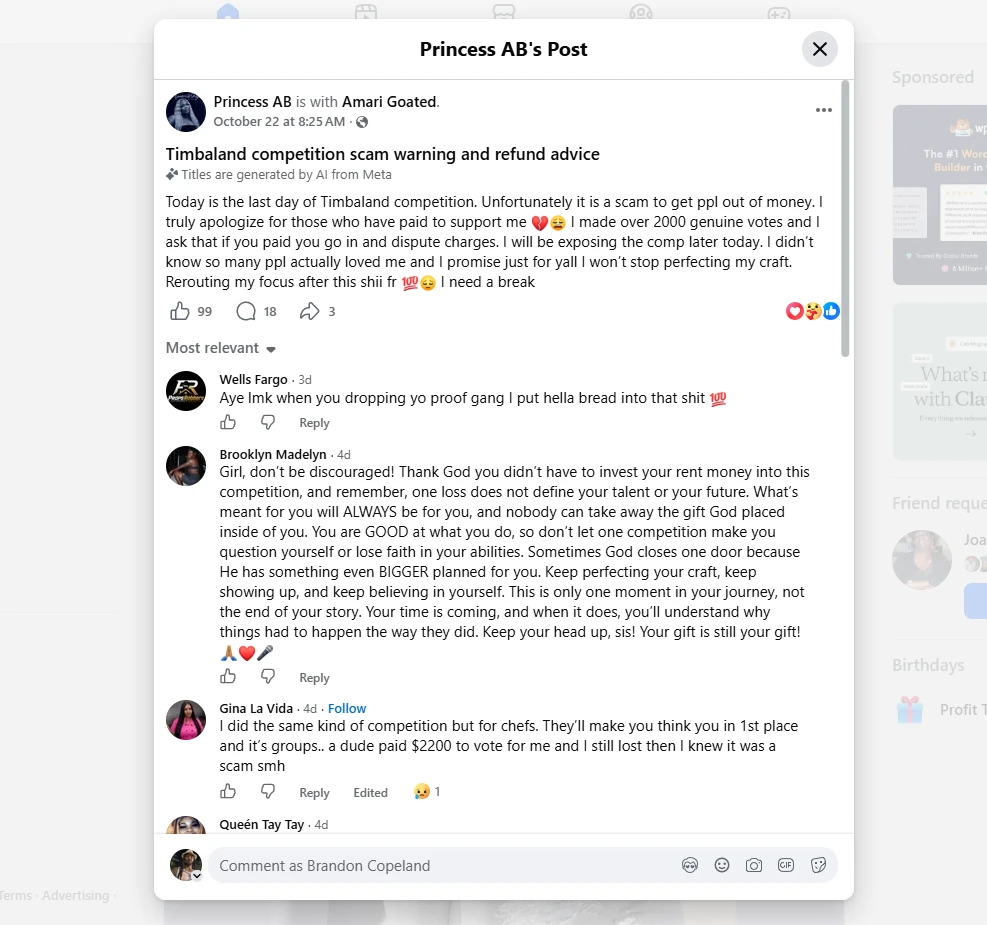
In one Facebook post dated October 22, an artist posting as Princess AB publicly apologized to supporters who had spent money voting for her.
She claimed to have received more than 2,000 genuine votes and urged supporters who purchased votes to dispute their charges.
The artist also expressed her belief that the competition was designed to collect money from participants and their supporters.
Her post attracted responses from followers who said they had contributed financially, along with comments from others describing frustrations with similar competitions.
The complaints illustrate an important distinction: when an artist enters a contest, the financial consequences can extend well beyond the contestant.
Their supporters may spend money because they genuinely believe they are helping someone achieve a dream.
For those supporters, the disappointment can be personal as well as financial.
Amari Blaze Raises Questions About Voting and Fairness
Independent rapper Amari Blaze has also publicly criticized Timbaland’s Global Search.
In an October 24 AllHipHop report, Blaze alleged that contestants and supporters spent substantial amounts purchasing votes while the competition’s selection process remained questionable.
She claimed that 2,500 votes could cost approximately $2,500 and questioned why some artists appeared to advance despite having smaller online followings than eliminated contestants.
Blaze also raised concerns about AI-generated musicians participating in the competition and alleged that the outcome may have been predetermined.
Those claims have not been independently substantiated.
Blaze reportedly threatened to contact the Federal Trade Commission and encouraged supporters to challenge payments they believed were improper.
Her allegations have added visibility to the controversy, but the concerns being raised extend beyond her individual experience.
The Bigger Problem With Pay-to-Vote Music Competitions
Music competitions have existed for decades.
From local talent showcases to nationally televised singing contests, aspiring performers have long competed for recognition, financial rewards and access to influential industry professionals.
But digital competitions can introduce a different financial model.
Instead of relying exclusively on judges or free audience participation, some competitions allow supporters to purchase votes.
That creates an important distinction between a talent competition and a fundraising-driven popularity contest.
Consider a hypothetical situation:
Two equally talented artists enter the same competition.
One artist has 10,000 supporters who can only afford to cast free votes.
Another has 500 supporters who are willing to purchase hundreds of additional votes.
Depending on the competition’s rules, the second artist could outperform the first despite having a much smaller audience.
That does not necessarily violate the rules or constitute fraud.
But it raises questions about what the competition is actually measuring.
Is the goal to identify exceptional musical talent, or to identify which artists can generate the most paid voting activity?
Both models can exist legitimately. The problem arises when the financial mechanics are not sufficiently clear to the people participating.
When Artists Become the Marketing Department
There is another aspect of paid-voting competitions that deserves attention.
Independent artists are often responsible for promoting their own participation.
They share voting links across Instagram, TikTok, Facebook and other platforms.
They encourage friends and relatives to participate.
They create promotional content, post daily reminders and ask their audiences to help them advance.
In effect, the artists become a decentralized marketing operation for the competition.
Every promotional post potentially introduces new visitors to the contest’s website.
Every supporter who purchases votes potentially generates revenue for the organization operating the competition.
And every artist who participates helps expand the competition’s reach.
This arrangement can be mutually beneficial when the contest is transparent and provides meaningful opportunities.
But it can also create an imbalance.
The organizers may receive promotional exposure and voting revenue regardless of which contestants win.
Meanwhile, most participating artists will leave without a prize.
That makes the rules, financial disclosures and advertised benefits especially important.
The Power of a Celebrity Name
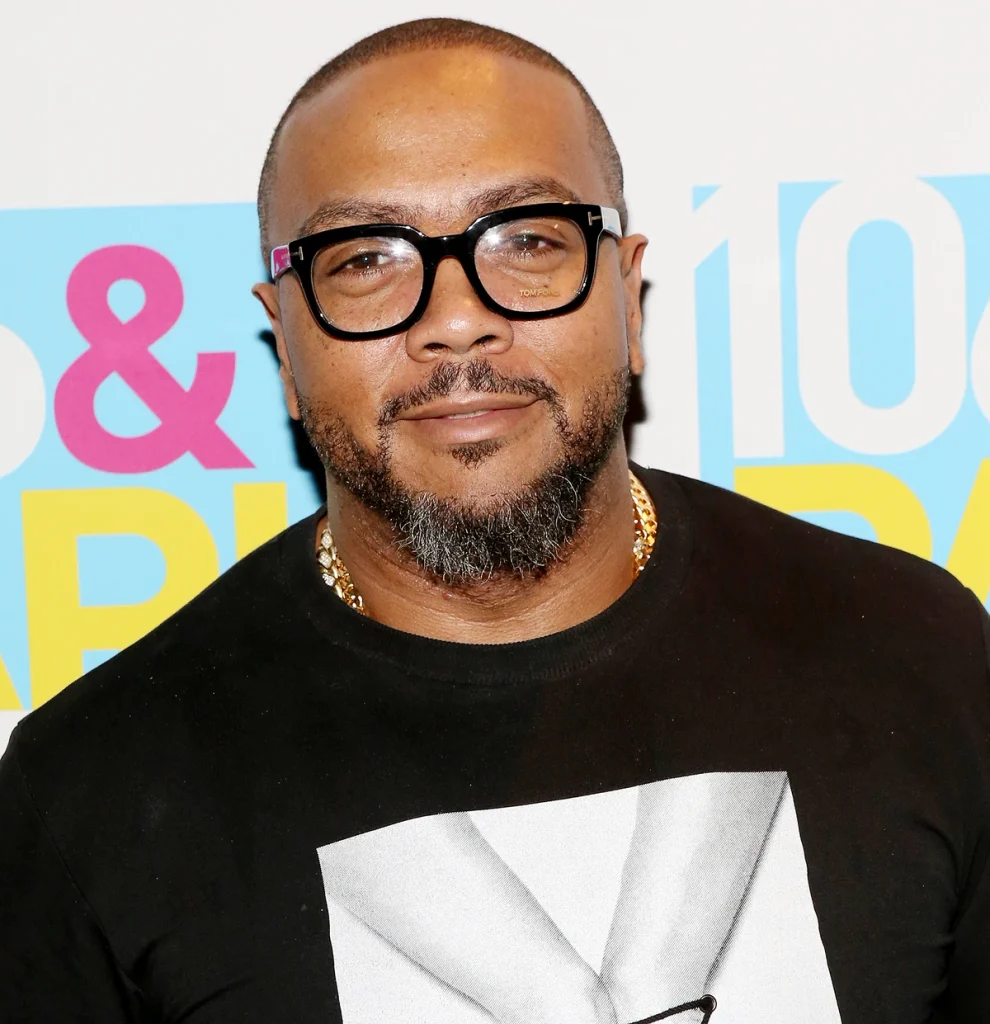
Timbaland’s involvement adds another dimension to the controversy.
As one of the most accomplished producers in modern hip-hop and R&B, Timbaland has helped shape the careers and sounds of artists including Missy Elliott, Aaliyah, Justin Timberlake and Nelly Furtado.
His name carries credibility.
For an emerging artist, a competition associated with Timbaland may feel fundamentally different from an unfamiliar online talent contest.
The possibility of being noticed by someone with his industry connections can be a powerful motivator.
That influence can attract artists who might otherwise be skeptical about spending money to participate in a competition.
It also raises expectations about transparency and accountability.
The available reporting does not establish whether Timbaland personally managed the voting system, selected winners or controlled the financial arrangements.
Those responsibilities should not be assumed.
However, the controversy demonstrates why competitions promoted through major celebrity partnerships need clear public explanations of how they operate.
Is Paid Voting Actually a Scam?
Not necessarily.
A competition that sells votes is not automatically fraudulent.
The legality and fairness of a paid-voting system depend on factors including the published rules, representations made to consumers, how votes are counted and whether organizers deliver what they promise.
A competition could openly disclose that purchased votes influence advancement and operate consistently with those rules.
Conversely, concerns would be more serious if organizers misrepresented the role of paid votes, failed to count purchases properly or advertised selection criteria they did not follow.
At present, the social media allegations surrounding Timbaland’s Global Search do not establish that such misconduct occurred.
The accusations warrant scrutiny, but they should not be confused with verified findings.
What Should Happen Next?
The competition’s organizers could address many of the concerns by publicly clarifying several issues:
- How free and purchased votes were counted.
- Whether contestants competed in separate groups or elimination brackets.
- How judges influenced the results, if applicable.
- Whether the published voting rules changed during the competition.
- What refund or dispute procedures are available to supporters.
- How the advertised prizes and winner selection were administered.
Providing this information would allow participants to better evaluate whether the competition operated as advertised.
Artists who believe they were misled can preserve receipts, promotional materials, contest rules and transaction records while seeking clarification from the organizers.
They may also submit complaints to appropriate consumer protection agencies if they believe deceptive practices occurred.
A complaint, however, is not itself evidence that a violation took place.
Independent Artists Deserve More Than the Promise of Exposure
The most important issue emerging from this controversy is not whether one artist should have won instead of another.
It is the relationship between aspiring musicians and the businesses selling them opportunities.
Independent artists already shoulder enormous financial responsibilities.
They pay for production, mixing, mastering, photography, artwork, music videos, advertising and distribution.
Many do all of this while maintaining regular jobs and supporting families.
When a competition asks those same artists to encourage their communities to spend additional money, the opportunity deserves careful scrutiny.
That does not mean every paid competition is exploitative.
But it does mean that artists should know exactly what they are buying into and what their supporters’ money actually accomplishes.
A famous producer’s endorsement should never replace transparent rules or meaningful accountability.
The PairOfDice Perspective: Artists Are More Than a Revenue Opportunity
At PairOfDice Media, we believe independent creators should have access to opportunities that help them build sustainable careers.
Music discovery should be about more than attracting artists with the possibility of recognition.
It should create real value through audience development, professional connections, exposure, performance opportunities and measurable career growth.
The Timbaland Global Search controversy highlights why that distinction matters.
An artist who mobilizes thousands of supporters has already demonstrated something valuable: the ability to inspire an audience.
That relationship should not be reduced to how many paid votes those supporters can purchase.
Even artists who never win a competition should be able to walk away understanding what they gained from participating.
As more independent musicians share their experiences, the music industry has an opportunity to examine whether its talent discovery models genuinely serve artists or primarily benefit the businesses organizing them.
The question isn’t simply whether Timbaland’s Global Search was fair. It’s whether the independent music industry has become too comfortable charging aspiring artists and their supporters for the possibility of being discovered.
For artists investing their time, money and reputations into these opportunities, that is a conversation worth having.
Related coverage and artist accounts
AllHipHop: Houston Williams, Timbaland Has A Major Problem – A Furious Female Rapper, October 24, 2026.
Artist testimony: Instagram Reel | YouTube Short
Social media discussion: Princess AB’s October 22 Facebook post and accompanying public comments.
Editor’s note: This article reports allegations and concerns expressed by artists and supporters. PairOfDice Media has not independently established that Timbaland or Global Search organizers engaged in fraud, manipulated votes or predetermined winners. The number of affected contestants and total spending have not been verified.