Why Protecting Your Creative Work Is Crucial
Your intellectual property (IP) is one of your most valuable assets. Whether you’re a musician, visual artist, photographer, designer, filmmaker, producer, or writer, protecting your work helps ensure that you remain in control of how it’s used, distributed, licensed, and monetized.
Bottom Line
Without protection, your work can be vulnerable to unauthorized use, ownership disputes, and missed revenue. The goal isn’t to make creativity complicated—it’s to make sure you have the documentation, agreements, and tools to protect what you create.
In This Guide
01
Copyright: The Basics
What Is Copyright?
Copyright is legal protection for original works of authorship, including music, lyrics, beats, artwork, photography, writing, film, video, and many other forms of creative expression.
Copyright can give a rights holder exclusive rights to:
01
Reproduce
Create copies of the original work.
02
Distribute
Control distribution of copies of the work.
03
Create Derivatives
Authorize remixes, edits, adaptations, and other derivative works.
04
Perform or Display
Control certain public performances and displays of the work.
What’s Protected?
Copyright generally protects original creative expression once it has been fixed in a tangible medium—such as an exported audio file, saved photograph, recorded video, illustration, or written manuscript.
MusicSongs, beats, recordings, stems, and lyrics
VisualPhotography, illustrations, graphics, and cover art
WritingBooks, poems, articles, scripts, and other written works
MediaFilms, music videos, documentaries, and other video content
What’s Not Protected?
- Ideas, concepts, methods, or systems by themselves
- Facts and procedures
- Many short titles, names, and phrases
- A general creative “style” or vibe
Think About It This Way
You may not be able to copyright the idea for a song about overcoming adversity—but your specific lyrics, composition, and recording may each contain protectable creative expression.
02
Registering Your Copyright
Why Register?
PUBLIC RECORD
Document Ownership
Registration creates an official public record associated with the work.
ENFORCEMENT
Strengthen Your Position
U.S. registration plays an important role when pursuing certain copyright claims in federal court.
REMEDIES
Potential Damages
Timely registration may make statutory damages and attorney’s fees available in qualifying infringement cases.
How to Register in the U.S.
1
Start Your Application
Visit the U.S. Copyright Office and begin the appropriate online copyright registration application.
2
Identify the Work
Provide information such as the creator, work title, creation date, and publication information when applicable.
3
Submit the Deposit Copy
Upload or submit the required copy of the work and pay the applicable filing fee.
International Protection
International copyright protection can involve treaties such as the Berne Convention, but enforcement procedures and available remedies vary by country. Creators doing substantial business internationally should consider professional advice about the jurisdictions that matter most to them.
03
Fair Use & Licensing
What Is Fair Use?
Fair use can allow limited use of copyrighted material without permission in certain circumstances, including commentary, criticism, news reporting, teaching, scholarship, or research.
Important
Fair use is highly fact-specific. There is no universal “10-second,” “30-second,” or percentage rule that automatically makes use of someone else’s work legal.
For example, a review may sometimes incorporate limited portions of a work for genuine commentary or criticism, particularly when the use does not substitute for the original work. Whether any particular use qualifies depends on the circumstances.
Licensing Your Work
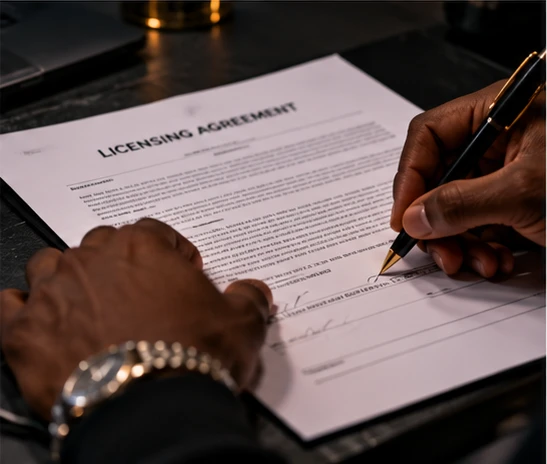
Licensing lets another person or company use your work under agreed terms without necessarily giving up ownership.
Exclusive
One Licensee
Certain rights are granted exclusively to a specific buyer or licensee, usually within a clearly defined scope.
Non-Exclusive
Multiple Licensees
You retain the ability to license the same work or rights to additional buyers under your agreement.
Your License Should Define
- What the buyer can use
- Where the work can be used
- How long the license lasts
- Territory
- Usage limits
- Fees and royalties
- Credit requirements
- Whether modification is allowed
- Revocation or termination terms
- Which files or assets are delivered
04
Digital Protection
Watermarking & Metadata
VISUAL CONTENT
Watermarks
Add a subtle signature, logo, or identifying mark to public preview images and videos when appropriate.
DIGITAL FILES
Metadata
Embed information such as creator name, contact details, copyright notices, and other identifying data in supported file formats.
DRM & Platform Tools
Digital rights management technologies can restrict certain forms of copying or distribution. Platforms may also offer matching or identification systems designed to identify potentially unauthorized uses of copyrighted media and help rights holders submit claims or route revenue.
These systems are useful tools, but they should complement—not replace—good documentation, contracts, registration, and record keeping.
05
Enforcing Your Rights
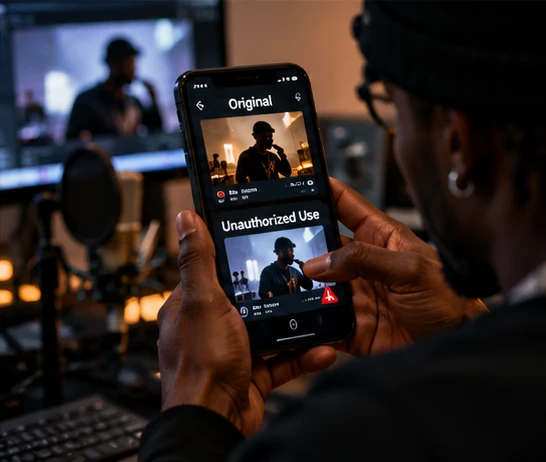
Discovering that someone has copied or distributed your work can be frustrating. Before reacting publicly, document what happened and preserve evidence.
01
Cease & Desist
A formal communication can demand that an unauthorized use stop and that infringing material be removed.
02
Platform or DMCA Process
For qualifying online infringement, a copyright owner may be able to use a platform’s copyright-reporting process or submit a legally compliant DMCA takedown notice.
03
Legal Action
For serious or unresolved disputes, speak with a qualified attorney about potential claims, damages, injunctions, settlement, and next steps.
Save the Evidence
Keep copies of:
- Screenshots
- URLs
- Dates and timestamps
- Downloaded or copied files
- Emails and messages
- Original project files
- Contracts and licenses
- Registration records
06
Trademarks & Patents for Creatives
TM
Trademarks
Trademarks are generally used to protect words, names, logos, slogans, and other identifiers that distinguish the source of goods or services.
For creators building a recognizable brand, trademark strategy can become increasingly important as the audience, products, events, and business grow.
U.S. federal registrations are handled through the USPTO.
PAT
Patents
Patents can protect qualifying inventions and certain designs rather than ordinary creative works such as songs or photographs.
They can become relevant when a creator develops new technology, hardware, tools, manufacturing methods, or other potentially patentable inventions.
Patent rights are highly specialized. Consider speaking with a patent attorney before publicly disclosing an invention.
07
Common Mistakes to Avoid
×
Assuming “Found Online” Means Free
Images, songs, videos, graphics, and text found through search engines or social media are not automatically free to use.
×
Ignoring Registration
Copyright protection can arise automatically, but registration can provide important legal and enforcement benefits.
×
Using Vague License Terms
Clearly define the scope, usage, term, territory, fees, credits, modification rights, and deliverables.
×
Not Planning Internationally
If your work reaches a global audience, consider how your rights and enforcement strategy may differ across jurisdictions.
Save This
Creator’s IP Protection Checklist
A simple protection workflow you can use every time you release new work.
- Register important works you publish or monetize.
- Embed creator, contact, and copyright information in file metadata.
- Use watermarked previews when appropriate.
- Use clear written licensing terms for commercial transactions.
- Save timestamps, drafts, exports, project files, and release records.
- Keep signed contracts, licenses, invoices, and payment records.
- Document unauthorized uses before requesting removal.
- Have reliable cease-and-desist and takedown procedures available.
Protect the Work. Build the Business.
Your creativity has value. Treat it like an asset.
You don’t need to become a lawyer to build smarter habits around ownership. Document your work, understand the agreements you sign, define your licenses, and get professional advice when the stakes become significant.
Legal Disclaimer: This article is provided for general educational and informational purposes only and does not constitute legal advice. Intellectual property laws, registration requirements, remedies, and legal procedures vary by jurisdiction and circumstance. Consult a qualified attorney regarding your specific situation.